How to follow VALORANT Champions Shanghai group stage like a pro analyst
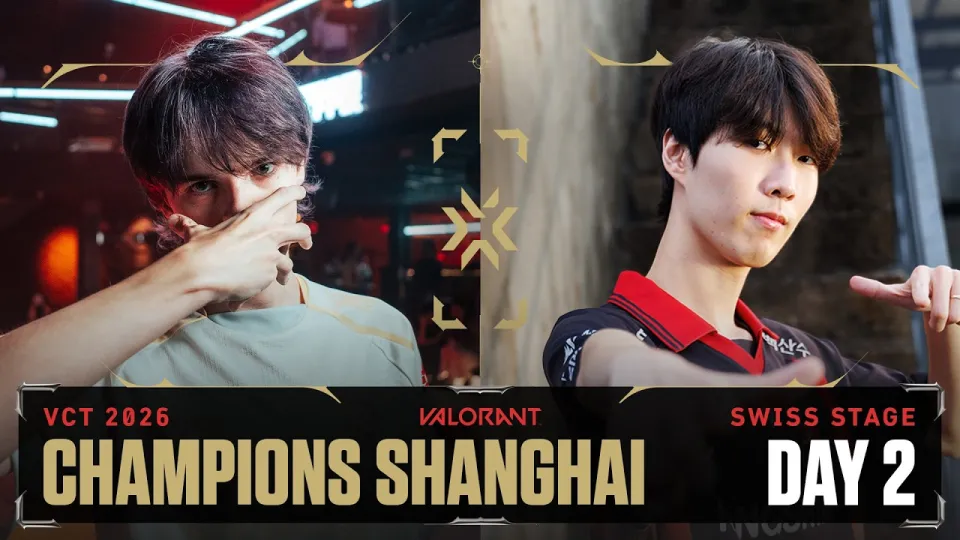
Video: VALORANT Champions Shanghai — Group Stage — Day 2
You can order the same kind of articles for your own video to boost it on YouTube and Google. Just message the Telegram bot @sat_sit_bot. The bot writes and publishes the articles itself (with your YouTube video embedded) on popular topical websites (no ads). Try it free: 50 articles on us.
· based on the channel VALORANT Champions Tour
VALORANT Champions Shanghai is the final international event of the 2026 VCT season, running from September 24 to October 18, where sixteen teams from the Americas, CN, EMEA and Pacific regions fight for the world title. To follow it properly, track the official schedule and bracket on VALORANT Esports on X, watch the daily VODs on the VALORANT Champions Tour channel, and treat the group stage as a seeding puzzle rather than a knockout. Day 2 of the group stage, published on September 25, 2026, is a good example of how fast a single broadcast day can reshape expectations.
What the VALORANT Champions Shanghai group stage actually decides
The group stage sorts sixteen qualified teams into the playoff bracket and eliminates the weakest performers before the bracket stage begins. Champions uses a group phase where teams are drawn from all four regional pools, so every group mixes playstyles and server cultures rather than repeating regional rivalries. Each match is typically a best-of-three, which means map preparation and veto discipline matter as much as raw aim. Because the event is the season finale, group results also decide which regions get the softer side of the bracket, and that seeding often decides who reaches the semifinals. Viewers who only watch the playoffs miss the part of the tournament where upsets are cheapest and most consequential.
How the Day 2 broadcast is structured
Day 2 of the group stage is a full broadcast block rather than a single match, and the VALORANT Champions Tour production stacks it accordingly. Expect an opening analyst desk segment, back-to-back series with short breaks, player interviews, and a recap of the previous day's results. The stream is built for both live viewers and VOD watchers: the channel publishes the full-day recording, and community timestamps split it into individual series. That structure is why the comment section under the Day 2 VOD reads like a live chat archive, with viewers arguing about region strength, match quality and interview pacing long after the games ended.
The four regions and the seeding debate
Champions invites teams from Americas, CN, EMEA and Pacific, and the split of slots between those regions is one of the loudest arguments in the community. CN receives multiple slots as its own region, which some fans see as too generous when its teams exit early, while others point out that a dedicated Chinese circuit is what produced the region's current challengers in the first place. Pacific, EMEA and Americas each bring their own qualifiers, and the resulting bracket is a stress test of whether regional depth translates to international best-of-three pressure. The practical takeaway for viewers is simple: a region's slot count tells you what Riot expects from its ecosystem, while group-stage results tell you what the ecosystem actually delivered.
Why Day 2 felt like a speedrun
One recurring reaction to the Day 2 VOD is that the day moved unusually fast, with series ending in straight maps instead of long grinds. Fast broadcast days usually mean one of three things: a clear skill gap inside a group, a map pool where one team's comfort pick is uncontested, or an aggressive early-round economy that snowballs before the opponent can stabilise. When several series end quickly, the analyst desk has less material to work with, and the broadcast leans harder on interviews and replays. For viewers catching up later, a quick day is actually easier to follow, because each series has a clear turning point rather than a back-and-forth marathon.
Reading the community reaction without getting spoiled
Group stage VODs are a spoiler minefield, and the Day 2 comments show two opposite habits. Some viewers ask for spoiler blockers and timestamp threads so they can watch series in order without knowing the score; others post results openly and turn the comment section into a scoreboard. The reliable approach is to open the VOD through the official channel, avoid the comment section until you finish, and use the community timestamp threads only after you have watched the day. Regional banter, slot arguments and complaints about translated interviews are all part of the experience, but none of them tell you anything useful about the actual level of play.
How to evaluate teams beyond the scoreline
A single group-stage day is a poor sample for judging a roster, and the Day 2 discussion proves it. Fans compared the day to a mismatch between ranked tiers, questioned whether certain teams deserved their international slot, and debated whether comms quality shown in broadcast clips reflected real coordination. Better signals to track are round-win rate on attack versus defence, pistol-round conversion, retake success, and how often a team wins the first engagement of a round. Those numbers separate a team that lost close maps from a team that was genuinely outclassed. Over a full group stage, the pattern matters more than any single result, and it is the pattern that predicts playoff performance.
Useful links
- Official VALORANT Esports updates: https://x.com/valorantesports
- Facebook: https://www.facebook.com/ValorantEsports/
- Instagram: https://www.instagram.com/valorantesports/
- TikTok: https://www.tiktok.com/@valorantesports
- Live streams on Twitch: https://www.twitch.tv/valorant
What to take from the Shanghai group stage
The group stage of VALORANT Champions Shanghai is where the 2026 season's storylines get sorted: which regions were overrated, which challengers are real, and which veterans still control the pace of a best-of-three. Day 2 showed how quickly a broadcast day can collapse into short series, and how loudly the community reacts when expectations and results disagree. Watch the VODs in order, check the bracket on the official channels, and treat every group result as a hypothesis rather than a verdict. The VALORANT Champions Tour channel is the author of this breakdown and the place to follow the rest of the event, so keep VALORANT Esports on X open for schedules, results and announcements as the tournament moves toward the playoffs.
Key takeaways
- VALORANT Champions Shanghai runs September 24 to October 18 and crowns the 2026 world champion.
- Sixteen teams qualify from four regions: Americas, CN, EMEA and Pacific.
- Group stage Day 2 aired on the VALORANT Champions Tour channel on September 25, 2026.
- VCT partnered with AWS, Coinbase, EWC, ENC, Globant, HyperX, Mastercard, OnePlus, Red Bull, Secretlab and Verizon across 2026.
- Official updates and schedules land first on X at https://x.com/valorantesports.
Source: VALORANT Champions Shanghai — Group Stage — Day 2 · Markdown version
Questions & answers
How many teams play in the VALORANT Champions Shanghai group stage?
Sixteen teams qualify for the event, drawn from the Americas, CN, EMEA and Pacific regions. They are split into groups during the group stage, with the strongest performers advancing to the playoff bracket. The exact slot distribution per region is set by VCT ahead of the tournament.
Why do some fans say China gets too many slots at international VALORANT events?
CN is treated as a standalone region, so it receives its own allocation of Champions slots instead of competing through Pacific qualifiers. Critics argue that early exits waste those slots, while supporters point to the size of the Chinese player base and the dedicated circuit it supports. The debate resurfaces every time a CN team is eliminated in the group stage.
How can I watch the group stage VODs without spoilers?
Open the full-day broadcast on the official VALORANT Champions Tour channel and avoid the comment section until you finish watching. Community timestamp threads are useful, but they often reveal results in the replies. Watching series in broadcast order preserves the tension of the day.
What should I look at to judge a team beyond the final score?
Track round-win rate on attack and defence, pistol-round conversion, retake success and first-engagement win rate. These stats show whether a team lost close maps or was genuinely outclassed. Over a full group stage, those patterns predict playoff performance far better than a single result.